The Impact of ICT on the Home
Report by Jon Morgan, Paul Simon, Len Cook, Tracey Willis, Rob
There are four main areas of influence on society that directly concern ICT’s effects on the home. These are;
It seems that although there are many good points about the developments in ICT and the effect that they have upon the home, it is important to note even if activities become part of accepted social life, this does not make them a good thing. Society needs to be aware of the harmful effects that the new developments can have in order to ensure they benefit society in the greatest possible way.
Contents
Smart Homes – the next evolution in housing?
Teleworking – the public in the private
ICT’s effects on leisure time within the home
The visions of ICT applications in the home such as ‘Able Mabel’ a humanoid domestic robot, offered by programmes such as Tomorrow’s World in the 1960s have little in common with the reality of ICT today. However, it is true to say that ICT is very much embedded into our everyday lives, even though we are for the most, unaware of it. The ‘killer apps’ of ICT until now have been the telephone and the television. Both these technologies have revolutionised our communication abilities, allowing discourse over vast distances. However, it is with the advent of personal computing technology and the Internet that ICT is now set to make its great leaps into the domestic sphere.
Initially, the PC was a business tool. However, through use and through development by early ‘hackers’ and later specialist developers, we have now reached levels where the PC can be a purely leisure based tool. It is in this context that PCs are entering more and more British homes. It is however, still true to say that ICT is driven by business applications. Networking, for instance, was a concept created for a simple file sharing purpose. With the advent of Microsoft’s .Net strategy and the prominence of the Internet, it could be argued that the network is a fundamental part of the modern computer. It is certainly this ability to communicate between appliances and hence between people, that gives ICT its power.
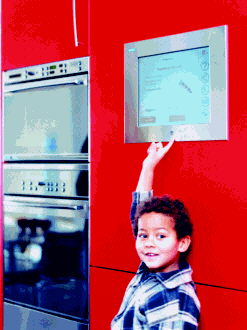
Until now the majority of domestic technology has been restricted to labour saving devices such as washing machines and dishwashers, and to utilities such as ovens, fridges and freezers. The addition of networking technology (including infrared, wireless, cable and even signals sent along the electricity mains) to these appliances has ‘upgraded’ them into ICT appliances. Integrated home systems or ‘Smart houses’ such as the ‘house of the future’ (see Figure 1) created by SEIMENS are the next dream to which we are said to be aspiring. Famously, Bill Gates, Chairman of Microsoft has also created his own futuristic home incorporating many of the latest technologies. Theoretically, these houses could automatically conserve power, refresh the air, and provide appropriate levels of light and heat through computerised control. Safety systems could prevent power points from delivering shocks, children from operating cookers, and burglars from gaining access to the home. What is more it will be possible to communicate with the ‘smart home’ from a distance, to find out who is tampering with your front door or to run a bath for when you get home.
Figure 1 A smart access panel in the kitchen of the Siemen's home of the future
When fantasizing about the various applications of ICT in the ‘smart home’, it is easy to get carried away with fancy ideas of virtual personal assistants and thought processing systems. These dreams are perhaps, the driving forces behind technological development in the home and in the wider world, however the reality is very different. Daniel Steiner, who currently lives in the SEIMENS house, described it as ‘rather disappointing at first sight.’ The technology is present, however it does its job without drawing attention to itself. Bill Gates believes that technology in the home should be ‘readily and easily available … so simple and natural to use that people don’t give it a second thought.’ He illustrates this with the example of the telephone which has become commonplace in modern homes, always present but inconspicuous. Figure 2 demonstrates a PDA, one choice for such a control a version of which is used in the SIEMENS home. This social acceptance is hard to achieve, even the PC has yet to achieve it. However, improved miniaturisation and portability, better interfaces, control, and displays, more programmability and greater information storage are also meaning that the methods of implementing ICT are nearing a stage where the technology is no longer as prominent.
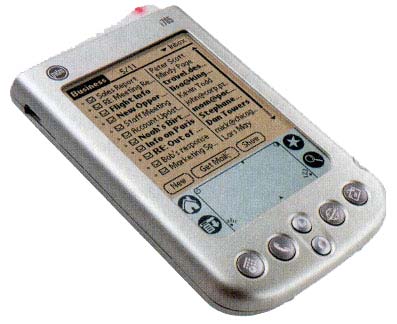
Figure 2 A PDA that could be used for controlling a 'smart house'
The ‘smart house’ concept does however, make an assumption that more automation and control of the environment will lead to greater satisfaction. On the one hand, in the busy modern lifestyle now prevalent in the West, it seems to allow time for leisure activities. However, many find the action of completing tasks around the home is in itself rewarding. It seems that activities such as building a log fire or washing dishes will become one of choice rather than a chore, thus also becoming part of our heritage.
Security
One of the greatest social issues that ICT in the home will have to face in order to achieve this acceptance is that of security. It is inherent in the nature of networking that everything on that network can see everything else. For example, in the early days of cable broadband Internet access, all those computers with File and Printer Sharing enabled were present in the Network Neighbourhood of all users of the ISP. It is therefore always possible for a ‘hacker’, be it criminal, corporate or even governmental, to gain access to your systems. This is in contrast to the current methods where ultimate security is in the hands of the house occupiers. For example, the front door of a house is currently locked with a physical key. The only way to enter the property is to either physically get hold of the key or break the lock. If, in the future, this were changed to a retinal scan, the data for which is held in a local or remote server, that data could be accessed and hence the house security breached without the knowledge of the homeowner. A yet worse scenario can be conceived if, for example, your video, television, surround sound speakers and Internet are networked. Not only would the digital television service providers know what programmes you were watching, but other agents could potentially view the DVDs you’ve been watching. It is not impossible to imagine, perhaps in a more difficult or extreme political setup than today, a situation where undercover arrests could be made, based on a profile that is created of your viewing habits indicating terrorist tendencies. Privacy issues are then fundamental to ICT and much more stringent security methods (such as Firewalls and Gateways) are necessary.
Similarly, in order for ICT in the home to prove successful, it is essential that it is seen to be almost one hundred per cent reliable, that people trust the technology. ‘Distrust closes down possibilities – trust opens them up.’ Conversely, there is an argument that society could become too reliant upon technology. For example, what would be the outcome if the entire house control, consisting of security, domestic chores, efficiency, environmental control, lighting and communication systems were to fail? How would one person or family fare in this situation? Perhaps more worrying however would be the concept of whole cities being knocked out by, for example, a computer virus. One could argue that it is too dangerous to create a society that is so dependant upon the technology around it. We are, whether we consider it a good idea or not, already living in a country that is very dependant upon ICT. It, as yet, has not suffered catastrophic failure, even when, in the case of the Millennium Bug, it was prophesied and as was evident in the fuel crisis of 2001. As long as safety measures are incorporated into every stage of development, it is possible that our society could enter a new era or paradigm where technology is normal, rather than exceptional. Of course, there is always plenty of opportunity for things to go wrong, the question is whether our society will be ready to cope when they do.
The only way that these technologies will ever become accepted into society would be to become affordable by all people, no matter what their income. In Britain, having a capitalist economy, this usually happens via a trickle down process. Initially, the offset is great to possess the new technology. However, as more and more people purchase it, so the price reduces, allowing even more people access to it. This does however, create a technological divide focused around both an existing wealth divide and also an intellectual divide as those with access to learning are able to utilise new technologies more effectively and hence become more successful.
The home has long been considered as the social hub of family life. It is therefore important to consider the family, being both a physical group that reside within the home and also as a social group that can extend beyond the boundaries of the home. With the increasing use of the Internet, research has started to examine its effects on communication and social interactions. One of its main uses is in email, message boards and chat rooms. It may be sensible to suggest then that the Internet as a technology has increased levels of social interaction. There is evidence that it leads to a greater number and better quality social relationships. It allows people to, in a sense be freed from the constraints of geography or isolation caused by stigma, illness or disability and allows people to form social relationships on the basis of common interests rather than convenience (Katz & Aspden, 1997; Rheingold, 1993). Research by Kraut et al. (1998) produced conflicting results suggesting that even though it was widely used as a communication device, use of the Internet actually damaged social relationships within the family and caused decreases in the size of social circles. Kraut et al. (1998) also found that increased Internet communication caused increases in depression and loneliness. Both Stoll (1995) and Turkle (1996) suggest that the Internet is causing people to become socially isolated and cut off from genuine social relationships, as they sit alone at their computers communicating with anonymous strangers through a socially impoverished medium. The evidence seems to suggest that even though the Internet opens up wider geographical channels of communication, it appears to be at the cost of communication within the home between family members. With the current trend towards a hybrid PC and entertainment system and the move towards accessing the Internet through televisions and other household devises it could be suggested that if such devices become commonplace, communicating over the internet could become more family orientated allowing many people to sit around and communicate with other groups, rather than the current situation where using computers is very much an isolated task. However, Which teenage girl wants to scroll through her e-mails on the TV screen? It will never be a public action to look through one’s correspondence. The answer perhaps lies in new technologies, such as Microsoft’s new Mira platform (see Figure 3), which promises to allow use of the PC (and hence email and the Internet), from a portable monitor. This kind of development toward mobile technologies, should allow family members to be sat in a communal room and yet have personal access to a computer.
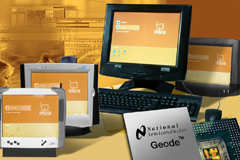
Figure 3 Publicity image of Microsoft's proposed Mira Platform
Other technologies also have an influence on the home as a social setting. The television (and more recently, the games console) appears to have replaced the warm log fire in the extent that families often congregate around the television to enjoy and discuss the evening’s entertainment. This is not always the case though as many people report family members often spending most evenings apart while they watch television or use computers in separate rooms. Research by Rosenblatt and Cunningham (1976) found that ‘higher levels of tension were found in families with high levels of television watching and suggested that television watching is used by some families as a means of avoiding rather than resolving emerging tensions.’
ICT also aids social interaction because new modern appliances are decreasing the amount of time people have to spend on tasks about the home. This has given people more leisure time that they can choose to spend socialising either within or outside the home.
Communication outside of the home
In addressing the effect of technology upon communication between family members and social groups outside of the physical home, research has indicated that recent advances in communication technology have played a large part in widening the boundaries of the family and have made communication easier between people who are geographically very far apart. Therefore the physical home is beginning to be seen as less of a social hub for the family as the immediate family boundaries now extend far beyond the walls of the physical home. The emphasis is becoming more on the social elements of the family and home as technology aids the breakdown of such physical barriers. The effects of such changes in focus upon people and their feelings of belonging to such social groups will only become apparent in the future when the children of the current technological generation start to build families of their own.
It seems that new technologies are merely giving people more options and that people who do not enjoy the social family now have options of other things to do and those that do enjoy socialising within the family will still do so. Recent advances have made it easier for family members to look beyond the usual boundaries of the home for social interactions with family and other people who without the technology would lie beyond their social world. Perhaps it is more appropriate to suggest that in each of these cases the technologies are neither divisive nor do they alone aid social interactions. It appears that the technologies act as tools or excuses whose effects are dependent upon people’s attitudes toward both the technology and each other.
Teleworking – the public in the private
Workers can spend more than three years of their working lives travelling. According to British Telecom this is worth more than £7.5 billion per annum. A survey of 300 managers indicated that they spent the travelling time dozing, daydreaming or reading the sports page. Less than 40% said they were working while travelling (Reported in the Financial Times 08/09/1992). Some commuters extend their working year by half through spending up to four hours a day getting to and from work This can have an adverse effect on health, performance and productivity. Working at home can convert commuting time to working time, working when and how they want.
Although professionals have worked from home for many years, preparing reports or presentations away from the office, it has only been recently, with increased ICT, that the home has begun to function effectively as an actual base of work. ICTs have therefore often been the enabler, rather than the instigator, of home-based work. Indeed, Dylan Armbrust of PCW believes that broadband will be the next evolutionary step in Teleworking, leading to ‘well rested, more contented productive workforce.’
Moving the base of operations into the home has many great and varied effects on the social arrangement of the household. ‘The top reasons [for Teleworking] cited by employees include saving money, family considerations, flexibility and the freedom from living near work.’ The most appealing, for many people, is the claim that working from home can alleviate stress. This is grounded in the theory that the constraints of normal working practice are more malleable when Teleworking. Consequently, previously conflicting duties of work and home become more possible to balance. A benefit for parents would be ‘being there in emergencies and no longer spending time commuting’
It should also be recognised that being home based can itself be stressful too. The home is traditionally seen as a place of sanctuary, where one can ‘relax and unwind from the tensions of the day.’ However, Teleworking can lead to a blurring of the distinction between home and work. Some people have offices at home where they work evenings and weekends. Other home-based workers can become workaholics unable to break off work to resume home life. In a home office, the obligations of both work and home are omnipresent and can often be directly opposing each other. These ways of working could, over time, become major sources of stress rather than liberation from it. Without the imposed time regimes of the office, teleworkers have to develop strategies for managing the pacing and timing of work within their overall domestic strategies.
ICT’s effects on leisure time within the home
With new technology and smart devices within the home, people are having the burden of household chores significantly decreased. This in theory should lead to people having increasingly more leisure time. Even if this is true and people do now have more leisure time, we are not necessarily better off as often people need this extra time to cope with the increasing demands of their working environments. Because of this effect, people are looking for ‘easy entertainment’ on demand that can give them a quick fix of fun without replicating the taxing and structured work environment. Television is a perfect example of an entertainment medium where people can just relax and be passively entertained. People do not always want to be spoon fed entertainment and many people also enjoy the excitement and challenge provided by modern computer games and games systems. Television and games systems would appear to be the ideal home entertainment solution for these people, but to what extent is this to the detriment of other activities?
With the introduction of digital satellite and cable television we now have hundreds of choices for entertainment. The increased choice obviously has the positive effect of allowing people to be provided with more of what they like, but does it also narrow our viewing habits and lead to people spending even more time watching television. Interactive television allows people to be less passive in their television watching but it can by no means even begin to replace the richness of human interaction. Although people tell pollsters that they would like to shop on the telly for example, few actually do. They might order a pizza, but nobody wants to take out a mortgage or buy life insurance on the TV. "TV is something you do when you do not want to do anything", says David Poltrack, head of research at CBS.
Watching television and playing computer games can be very solitary forms of entertainment and perhaps we are choosing the easy option to the detriment of the social interaction that other leisure activities can provide. Is it possible that where children in the past may have gone to the local park to play football with their friends they now each sit alone playing virtual football on their computers? Evidence suggests that computer simulations will not completely replace these sorts of activities but to some extent they are taking over from older forms of entertainment. It was noted during discussion that many people enjoyed playing board games with their family at Christmas time. Even though this was obviously an enjoyable activity very few families played the games at other times during the year. The majority of people said that of an evening the family would almost always sit around and watch the television.
It could be argued that the newer console based computer games, for example those on the PlayStation 2, X-Box and Game Cube have increased the amount of social interaction that is involved with computer game playing. The consoles allow multiple players to sit in the same room and compete against one another. These consoles are also often situated in the living room of a house unlike the traditional PC that usually resides in bedrooms or studies. It is true that many PC games can be played against other people across a network but often these people are in different rooms or even sometimes when the internet is used, the other side of the world. The fact is that networked PC games do not provide the same competitive social environment that can be found with console based games and it must be true that the advancement of the console based games system has made the social elements of these games much richer.
Bibliography
Armbrust (2002)
BBC, ‘Is 'Able Mabel' a reality yet?’, Tomorrow’s World Website, http://www.bbc.co.uk/science/tw/2002/mar13robots.shtml (last accessed 15/05/2002)
Bertin and Denbigh (1998)
Gates, B. (1995) The road ahead, Penguin Books, London
Har-Even, B. (2002)
Haddon and Silverstone (1999) Information and communication technologies in the home : the case of teleworking, University of Sussex
MacKenzie D., Wajcman, J. (1999) The social shaping of technology, Open University Press
Siemens House of the Future http://w4.siemens.de/FuI/en/archiv/newworld/heft1_02/artikel01 (last accessed 15/05/2002)
Keen et al. (2000) ‘Electronic Commerce and the Concept of Trust’ in: Electronic Commerce Relationships Trust By Design, PHPTR
Rosenblatt and Cunningham (1976) quoted in Bernardes, J. (1997) Family Studies, Routledge
Pitman, S. Home Sweet Home – Sweet Work? Telecommuting: The Convergence of Work, Home and Family Spheres, http://www.iamot.org/~chik-link/453home.html (last accessed 15/05/2002)
NatWest (1996) ‘Changing Places: A Manager’s Guide To Working From Home’ in: New Ways to Work, NatWest Group
The Economist (2002) ‘Entertain Me’: A Survey of Television, April 13th 2002
The Economist (2002a) ‘Power in your hand’: A Survey of Television, April 13th 2002
ICM (1999)